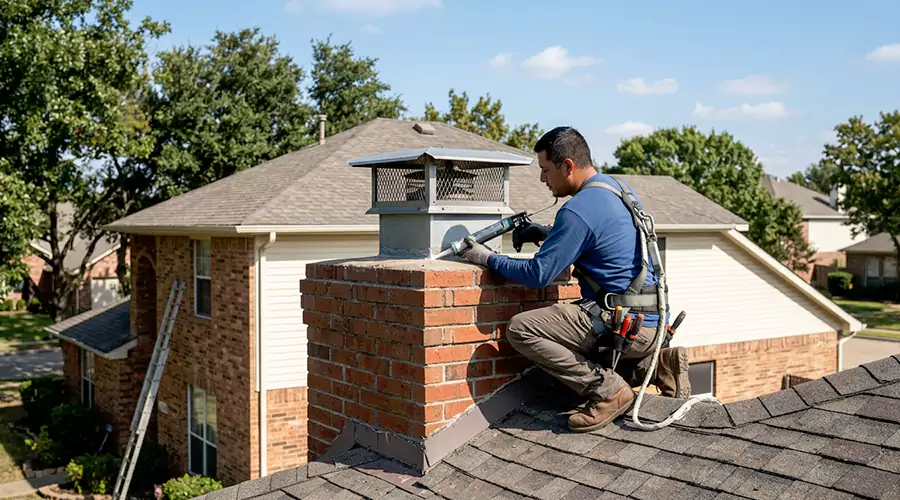
How to Know If You Need Chimney Cap Repair
Chimney cap repair costs $50 to $150 for minor fixes. Learn the signs of cap damage, when to repair versus replace, and how to spot problems early.




Based on 500+ Reviews

Proudly American
Owned & Operated

You may need chimney cap repair if the cap is loose, rusted, dented, leaking, or missing part of its protective mesh. A damaged cap can allow rain, debris, birds, and small animals into the flue. Minor problems may be repairable, while severe corrosion or deformation usually makes replacement the better option.
A chimney cap sits over the flue opening at the top of the chimney. Although it is a relatively small component, it plays an important role in protecting the chimney from weather and outside debris.
Most chimney cap problems start with visible deterioration or changes in how well the chimney stays protected from rain. Some warning signs can be spotted from the ground, while others become noticeable inside the fireplace.
Common signs include:
A rusted or missing cap deserves prompt attention because water can enter the chimney and contribute to masonry deterioration.
Chimney caps are exposed to weather throughout the year. Rain, snow, wind, temperature changes, and moisture can gradually weaken metal components. Galvanized steel caps may eventually develop corrosion as their protective coating wears down. Fasteners can also loosen after repeated exposure to strong winds.
Other common causes include:
Metal chimney cap repair may be possible when deterioration is limited to a small dent, loose fastener, or minor damaged section. Severe rust is different because corrosion can weaken the metal throughout the cap rather than affecting one isolated area.
A damaged cap can expose the flue to water and debris. Rain entering through the top can eventually contribute to moisture problems deeper inside the chimney. This Old House notes that chimney caps can help keep rain from falling down a fireplace chimney and prevent obstructions caused by nesting animals or debris.
Possible consequences include:
| Cap Problem | Possible Result |
|---|---|
| Missing top cover | Rain enters the flue |
| Broken mesh | Animals or debris enter |
| Loose cap | Wind may remove it |
| Heavy corrosion | Holes allow moisture inside |
| Bent cap | Reduced protection from rain |
| Poor fit | Water can bypass the cover |
Water problems should not automatically be blamed on the cap. Crown cracks or failed flashing can produce similar symptoms.
Yes. A cap can often be repaired when damage is minor and the main structure remains solid. Small dents may sometimes be corrected. Loose fasteners can be secured when the surrounding metal remains strong. Minor holes or isolated defects may also be repairable depending on the material.
Chimney cap repair is generally most practical when:
Angi reports that small issues such as minor rust, loose screws, or tiny holes may sometimes be repaired instead of requiring a new cap.
Replacement becomes more practical when deterioration is widespread. Severely rusted metal may continue weakening even after individual holes are patched.
A new cap is usually a better choice when:
Angi recommends replacement when a cap is missing, severely rusted, cracked, or warped. It also suggests considering replacement when the repair price exceeds about half the cost of a new cap.
Chimney cap repair cost varies according to the problem and the condition of the existing cap. Minor issues generally cost less than installing a completely new unit. Angi reports that small repairs involving minor rust, loose screws, or tiny holes can cost about $50 to $150. HomeGuide gives a broader $200 to $850 range for chimney repairs involving cap problems, depending on the scope of work.
| Type of Work | Typical 2026 Cost |
|---|---|
| Small cap repair | $50 to $150 |
| Sealing or waterproofing | $150 to $400 |
| Cap replacement | $190 to $850 |
| Custom replacement | Up to $1,000+ |
The wide range reflects differences in material, roof access, chimney height, and the amount of damage.
Repair is normally cheaper when the cap has one small defect. Replacing an older cap may provide better long-term value when multiple areas are deteriorating. Chimney cap replacement cost generally ranges from about $190 to $850 in 2026, with many projects averaging around $300. Repair may make sense for a relatively new stainless steel cap with a loose fastener.
Replacement may make more sense for an old galvanized steel cap covered with corrosion. The decision should consider both current repair cost and the remaining useful life of the cap.
You can complete a basic inspection from the ground without climbing onto the roof. Binoculars or a camera with optical zoom can reveal obvious movement or missing sections.
Look for:
Check the fireplace after heavy rainfall for unexpected moisture. Listen during strong winds for rattling metal near the chimney. Do not climb onto a steep or wet roof just to inspect the cap. Roof-level work presents significant fall hazards.
Professional inspection is appropriate when the cap cannot be safely viewed or when water continues entering the chimney.
Consider professional help when:
A professional can also determine whether the problem is actually the cap rather than another chimney component. Water entering from above may come from the cap, crown, flashing, liner, or masonry.
Regular visual checks can help catch small defects before the cap fails. Inspect the cap after severe wind or storms. Look for changes in its position and visible corrosion.
Keep these maintenance habits:
Avoid waiting until the cap disappears completely before taking action.
You likely need chimney cap repair when you notice rust, loose hardware, damaged mesh, minor holes, or small changes in the cap's position. Repair can make sense when the metal remains structurally sound. Severe rust, major warping, or repeated failures usually point toward replacement instead. Check the cap safely from the ground and investigate new damage before water or debris begins affecting other parts of the chimney.
Minor surface rust may be repairable when the metal remains strong. Heavy corrosion usually makes replacement more practical.
Yes. A damaged or missing cap can allow rain to enter through the flue opening.
A loose cap may appear tilted or move during strong winds. Rattling sounds can also indicate loose hardware.
Yes. Broken or missing mesh can allow birds and small animals into the chimney.
Lifespan depends on the material and weather exposure. Stainless steel and copper generally resist corrosion longer than basic galvanized steel.
Repair usually makes sense for small isolated defects. Replacement is generally better when the cap is heavily rusted, warped, or repeatedly failing.
Chimney cap repair costs $50 to $150 for minor fixes. Learn the signs of cap damage, when to repair versus replace, and how to spot problems early.
